Dialogic Intermingling of Social Voices in the Novels of Dostoevsky
Dostoevsky’s novels help reveal how individuals construct their understanding of themselves amid the social structures of their era. A central theme in my interpretations of his novels is the concept of understanding, which is often explored through the dialogic intermingling of social voices. In this context, understanding is intertwined with social activity, echoing the ideas of Harvey Garfinkel and ethnomethodology.
Polyphony and My Double Life
Here are some key themes that I explore in Dostoevsky’s work:
Polyphony of voices: Dostoevsky portrays society as a great dialogue, highlighting the interplay and interaction of individual and social voices, not isolated perspectives or monologic discourses.
The split individual: Dostoevsky’s characters often grapple with a conflict between conforming to societal norms and resisting them to preserve their individuality, an internal struggle exemplified by Prince Myshkin in The Idiot.
Dostoevsky’s novels — especially The Double and The Idiot explore how individuals navigate their identities in a layered complex of social landscapes. The dynamic interplay of voices in those novels reveals the inherent tension between social conformity and individual autonomy, between tacit acquiescence and creative resistance.
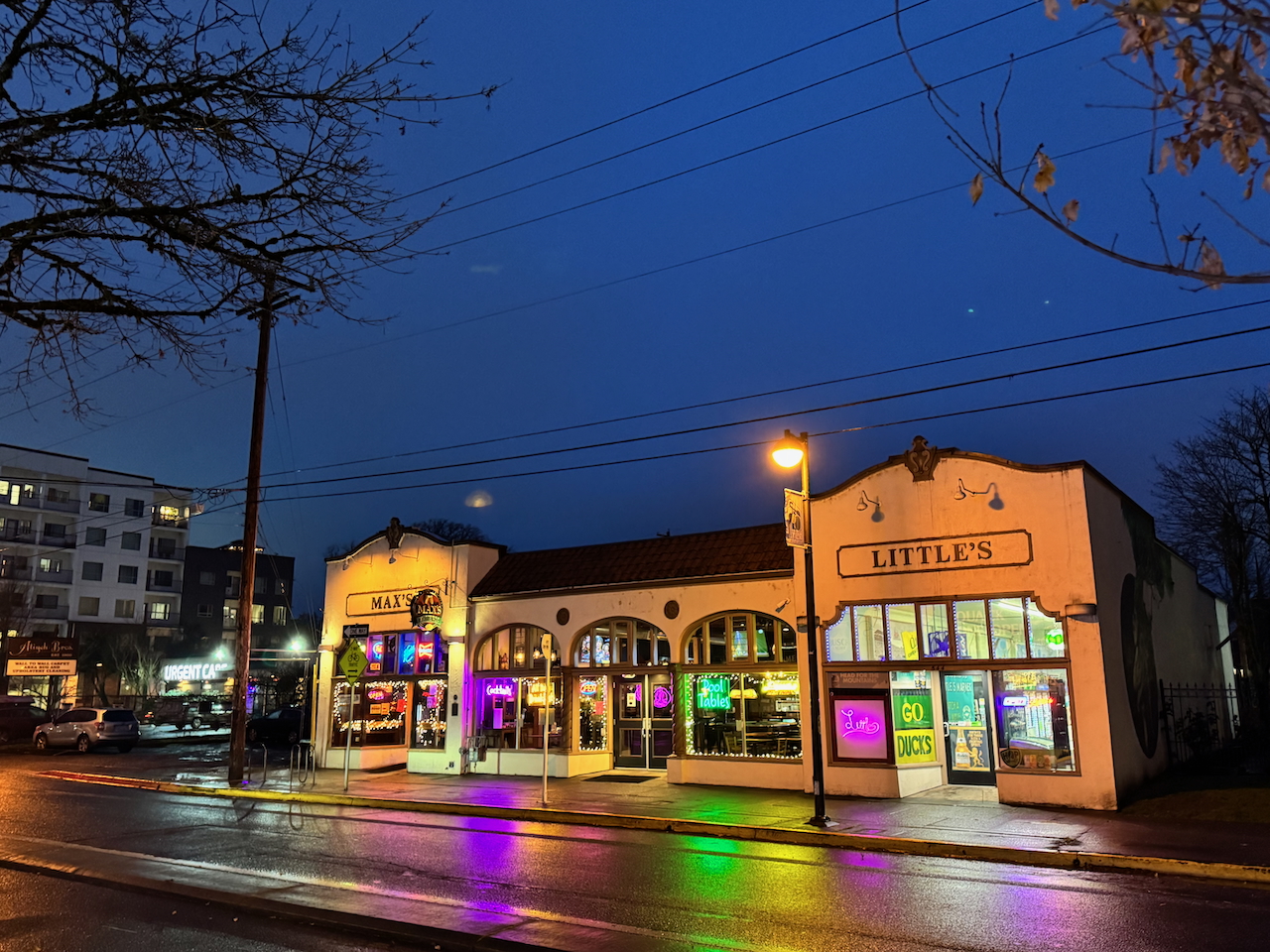
Voices and memories intermingling between the campus and the city. Max’s, Eugene, Oregon, near the University of Oregon. February 2026. Photograph by Steve Hoenisch.
Indoctrination and Resistance in Psychotherapeutic Dialogue
The Myth of Psychoanalysis: Wittgenstein Contra Freud
Interpretation and Indeterminacy in Discourse Analysis
A Wittgensteinian Approach to Discourse Analysis